We Are Spreading Tomorrow’s Drinking-Water Crisis on the Ground Today
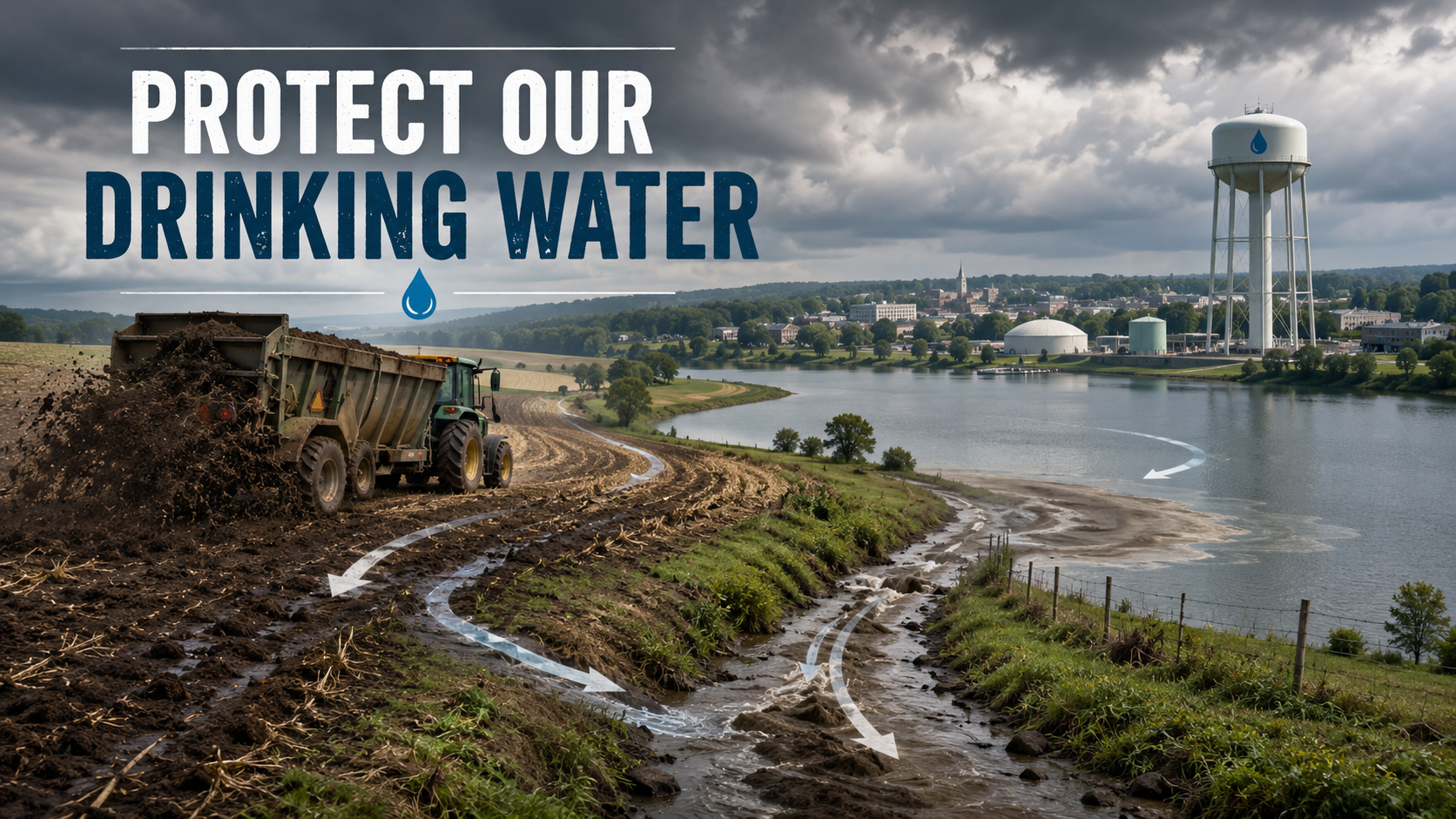
Look at the HumanureMap and then look at the streams, creeks, rivers, lakes, and reservoirs surrounding the reported locations.
The pattern should concern every person who depends on public drinking water.
Treated sewage sludge, commonly marketed as “biosolids,” is being spread on agricultural land across the country. It may be described as fertilizer, but it begins as material removed from municipal wastewater. That wastewater can contain chemicals discharged from industries, businesses, landfills, hospitals, household products, and countless other sources.
Wastewater treatment plants were built to treat sewage. They were not designed to remove every persistent industrial chemical that enters the sewer system.
Some of those chemicals, including PFAS, can become concentrated in sewage sludge. Once that material is hauled away and spread on farmland, the contaminants do not simply disappear.
Everything Flows Downhill
When biosolids are spread near a watershed, the issue does not necessarily remain within the boundaries of that field.
Rain can carry contaminated soil, sediment, and dissolved chemicals into roadside ditches, creeks, ponds, rivers, and reservoirs. Contaminants may also move downward through soil and reach groundwater. That matters because communities throughout Oklahoma depend on both surface water and groundwater for drinking water.
A field may be miles from a municipal water intake and still be part of the same watershed.
Water does not recognize county lines, property boundaries, permit boundaries, or promises that the material was “properly applied.” What is placed upstream can eventually affect people downstream.
This does not mean every reported location has contaminated a water supply. It does mean that spreading material containing unknown concentrations of persistent chemicals near drinking-water sources creates a risk that deserves immediate investigation.
PFAS Do Not Behave Like Ordinary Fertilizer
PFAS are often called “forever chemicals” because they are extremely persistent. They do not readily break down in soil or water.
The Environmental Protection Agency has acknowledged that sewage sludge may contain PFAS and other contaminants received from industrial facilities, landfills, homes, and other upstream sources. The EPA’s draft risk assessment also examined how PFOA and PFOS in land-applied sludge may move into soil, groundwater, surface water, crops, livestock, and food.
That should end the claim that there is nothing to worry about.
The question is no longer whether contaminants can be present. The questions are:
- How much is being spread?
- What chemicals are in each load?
- How close are the fields to streams and reservoirs?
- How much runoff occurs after heavy rain?
- Are nearby wells, creeks, and water intakes being tested?
- Who will pay if contamination is discovered years from now?
Those questions should be answered before another load is applied, not after families learn that their water source has been contaminated.
Cleanup Will Cost More Than Prevention
Once persistent chemicals enter a reservoir or groundwater supply, removal can be difficult and expensive.
Public water systems may need advanced treatment equipment, ongoing testing, replacement filters, new wells, alternative water sources, or major treatment-plant upgrades. Those expenses do not disappear. They are passed along to taxpayers and water customers.
Meanwhile, farmers and landowners may face contaminated soil, damaged property values, restrictions on agricultural production, and years of uncertainty.
The wastewater plant gets rid of its sludge. The spreading company gets paid. The material is called fertilizer. But the long-term environmental and financial liability may be left with rural families, farmers, towns, and public-water systems.
That is not responsible waste management. It is transferring risk from the waste producer to the public.
We Must Act Before the Damage Is Permanent
At a minimum, Oklahoma should require comprehensive testing of every load of biosolids before land application. Results should be publicly available and tied to the exact fields where the material is applied.
There should also be strong setbacks from:
- Streams and drainage channels
- Lakes and reservoirs
- Public drinking-water watersheds
- Municipal water intakes
- Private and public wells
- Floodplains
- Schools, homes, and livestock operations
Land application should not be allowed when the material contains unsafe levels of PFAS or other persistent contaminants. Areas surrounding public drinking-water sources deserve even stronger protection.
HumanureMap exists because the public has a right to know where this material is being spread. The map is built from public records and community reports, and reported locations should be investigated and verified through permits, application records, soil testing, and water sampling.
We cannot continue spreading first and asking questions later.
What is placed on the ground today may remain in the soil and water for generations. By the time contamination appears at a public water intake, private well, cattle pond, or family farm, the opportunity to prevent it will already be gone.
We must stop treating our watersheds as disposal sites.
Our drinking water, farms, livestock, and rural communities are worth protecting before the damage is done.