
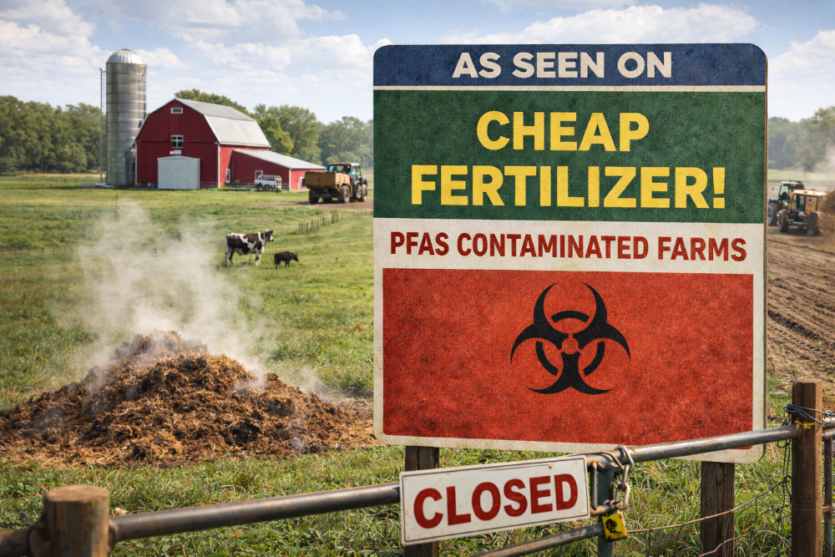
 Farm Shutdown
When “Cheap Fertilizer” Became a Nightmare
Farmers Win Big Prices — Then Lost Their Farms to PFAS Contamination
Across the United States, many farmers believed they were getting a good deal on fertilizer when they turned to biosolids — nutrient-rich products made from treated sewage sludge. Biosolids have been widely promoted as a cost-effective way to improve soil fertility because they contain nitrogen, phosphorus, organic matter, and other nutrients important for crops and pastureland. In many regions, biosolids are applied under state and local permits, allowing farmers to benefit from a low-cost alternative to expensive commercial fertilizers.
https://www.maine.gov/dacf/ag/pfas/pfas-response.shtml
However, what many farmers did not know — and what few wastewater plants routinely test for — is that biosolids can also contain “forever chemicals” known as PFAS (per- and polyfluoroalkyl substances). These man-made compounds are extremely persistent in the environment and do not break down easily in soil, water, or living organisms. PFAS have been linked to serious health concerns including cancer, liver disease, and compromised immune systems.
When these contaminated biosolids are spread on farmland, PFAS compounds can accumulate in soil, crops, livestock, and even drinking water sources. In several states that have undertaken systematic testing, regulators found alarming levels of PFAS on fields treated with biosolids — and the consequences for farmers have been severe.
In Maine, for example, widespread testing revealed farms with soil, livestock, and water contaminated by high PFAS levels. The discovery led state officials to shut down multiple farms outright, and, in some cases, farmers were forced to euthanize livestock or halt production entirely. Maine eventually became the first state to ban the use of biosolids on agricultural land due to these contamination threats.
Similar hardships have emerged elsewhere. In Michigan, investigations uncovered PFAS contamination in beef and dairy products after biosolids had been applied to fields, devastating producers who had assumed their products were safe. The problem is widespread enough that advocates worry that millions of acres of U.S. farmland could be affected by PFAS from biosolids.
Farmers have also pushed back legally. Groups representing agricultural producers in the Northeast have filed notices of intent to sue the U.S. Environmental Protection Agency (EPA), arguing that the agency has failed to protect farmers from PFAS contamination — a chemical group not regulated in biosolids under federal standards despite their known persistence and health risks.
https://www.kcur.org/news/2024-05-29/pfas-contamination-lawsuit-epa-farmers
Yet while some states have taken steps such as testing requirements or bans, there remains no comprehensive federal standard for PFAS levels in biosolids applied to agricultural land. This regulatory gap means farms can be blindsided by contamination they never saw coming, with grave economic and environmental consequences.
This emerging crisis underscores the need for transparency, better monitoring, and informed choices about what goes onto agricultural land — not only for the safety of farmers and ranchers, but for the communities that depend on their production.
HumanureMap exists to help fill the information gap. By inviting community reporting of land application activity and encouraging awareness of materials like biosolids and humanure, we aim to promote informed decision-making and protect agricultural livelihoods.